
Fern Leaf Yarrow

Fern Leaf Yarrow
(Achillea filipendulina)
Priority: - Prevent / EDRR
Tags: Terrestrial
Identification and Reproduction
Fern leaf yarrow (Achillea filipendulina) is a close relative of native common yarrow (Achillea millefolium) but with tightly bunched yellow flowers.
Identification:
- Perennial plant growing up to 1.5m tall.
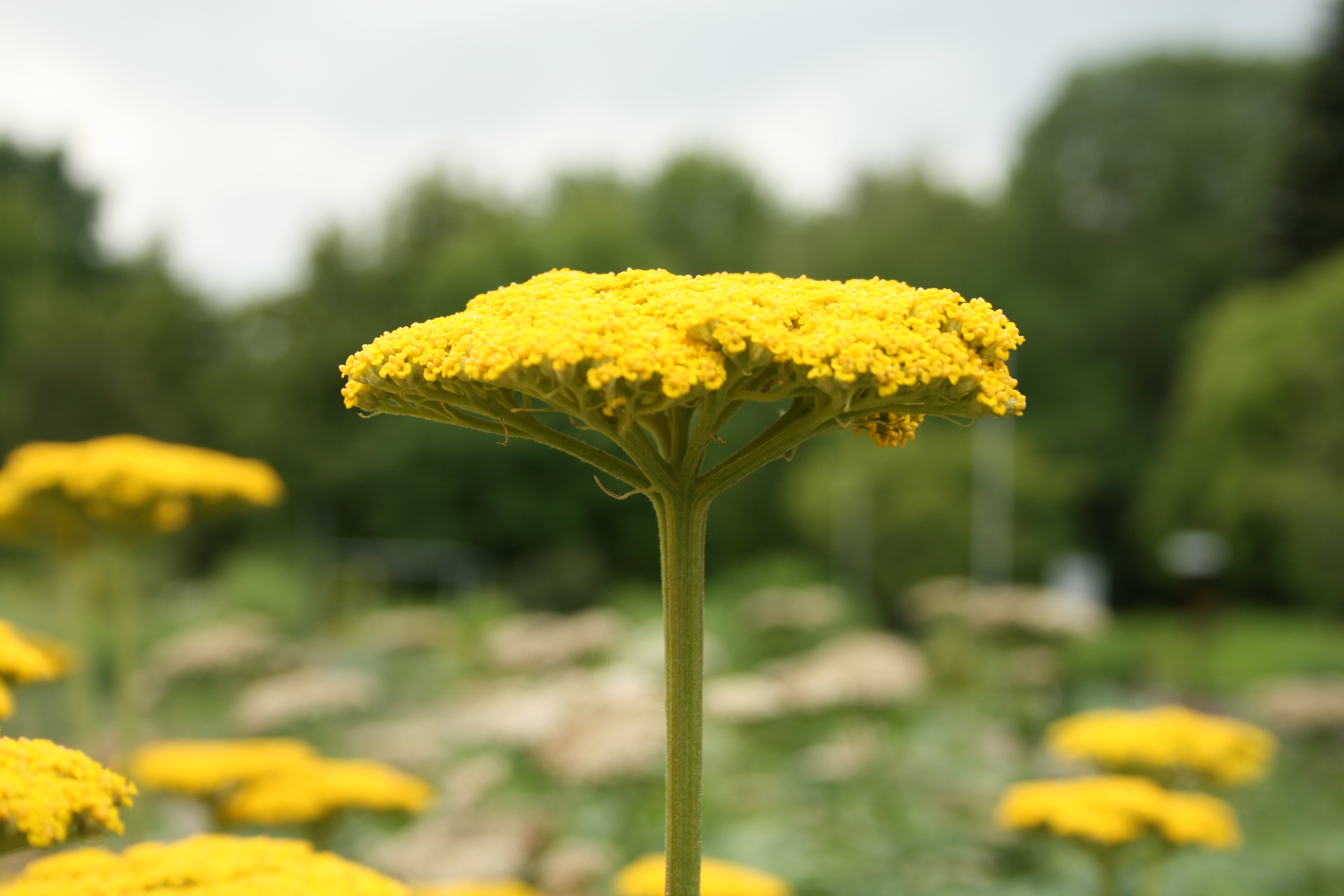
- Flowers are yellow and grow in tight clusters at the top up the stem up to 10cm across.
- Leaves are fern-like with toothed margins.
- Roots systems are shallow and rhizomatous allowing the plant to spread outwards.
Common tansy, a look alike of fern-leaf yarrow, has more button-like flowers.
Reproduction:
Fern leaf yarrow spreads through seeds and rhizomes.
Habitat & Ecology
Found in disturbed areas, meadows, pastures and roadsides. It thrives in full sun.
Impacts
Ecological:
Can outcompete native plants, reducing biodiversity.
Social:
It is toxic to dogs, cats and horses.
Management
Prevention is a high priority for this plant.
- When leaving an infested site make sure bur seeds are not attached to clothes, shoes, equipment, pets and vehicles.
- Be cautious when purchasing wildflower seed mixes, especially if they are not locally produced. These can contain seeds of fern leaf yarrow and other invasive species.
Mechanical/Manual Control:
- Plants can be dug up although care must be taken to remove the entire root system. Plants can regrow from root segments left behind.
- Removal must go down 30 cm into the soil to remove all roots.
Chemical Control:
- Dicamba, chlorsulfuron, clopyralid, MCPA, tricloplyr and 2,4-D are all reported to be effective in controlling fern-leaf yarrow.
Resources
Fern-leaf Yarrow Factsheet: Sea to Sky Invasive Species Council

News

Chilliwack River Knotweed Walks 2026
Join us for a FREE walk along the Rotary Trail and learn more about knotweed in the Chilliwack-Vedder River! Saturdays: July 11 • Aug 1 • Aug 22 • Sept 12 - 10:00 am - 11:30 am

Tansy Ragwort Pickup 2026
If you pull out Tansy Ragwort on your property, we will come pick up your bags for disposal!